






Remember back in the day when ranking on Google was just about stuffing the right keywords and buying a handful of backlinks? If you tried those hacks today, your website would likely vanish from the search results faster than a trendy meme.
The internet changed. In 2026, we aren’t just fighting for keywords, we are fighting for trust. With AI-generated content flooding every corner of the web, Google has one primary mission, figuring out who is a real human with real knowledge and who is just a bot echoing the same old information.

That’s where E-E-A-T comes in. It’s the compass Google uses to decide if your content is worth showing to a human being. If you want to rank high this year, you don’t just need to be relevant—you need to be the undisputed authority in your niche.
What is Google E-E-A-T?
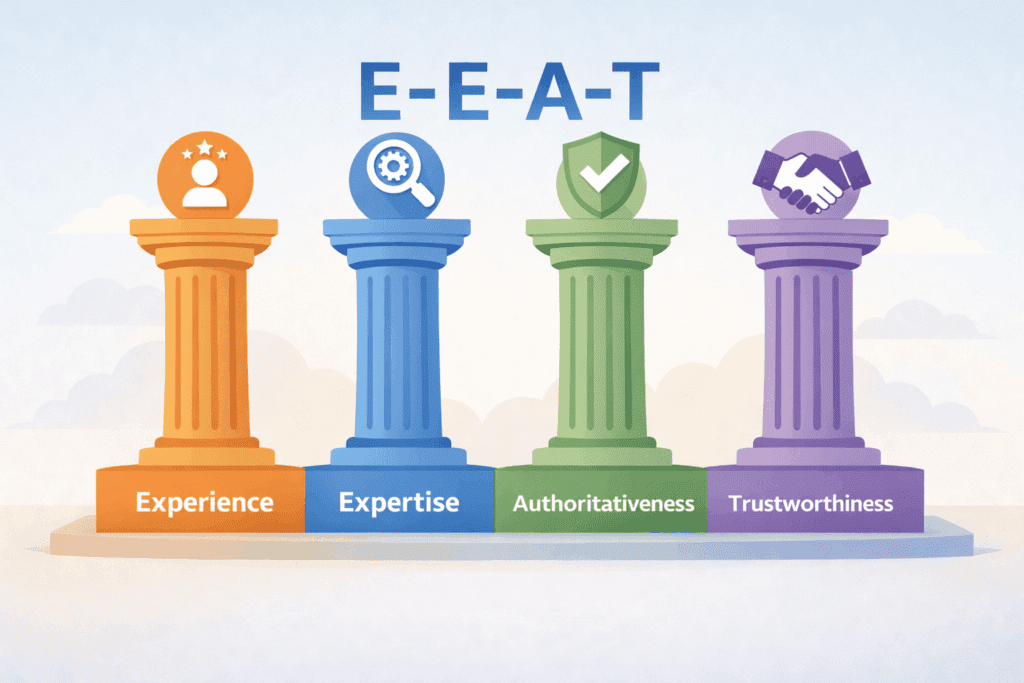
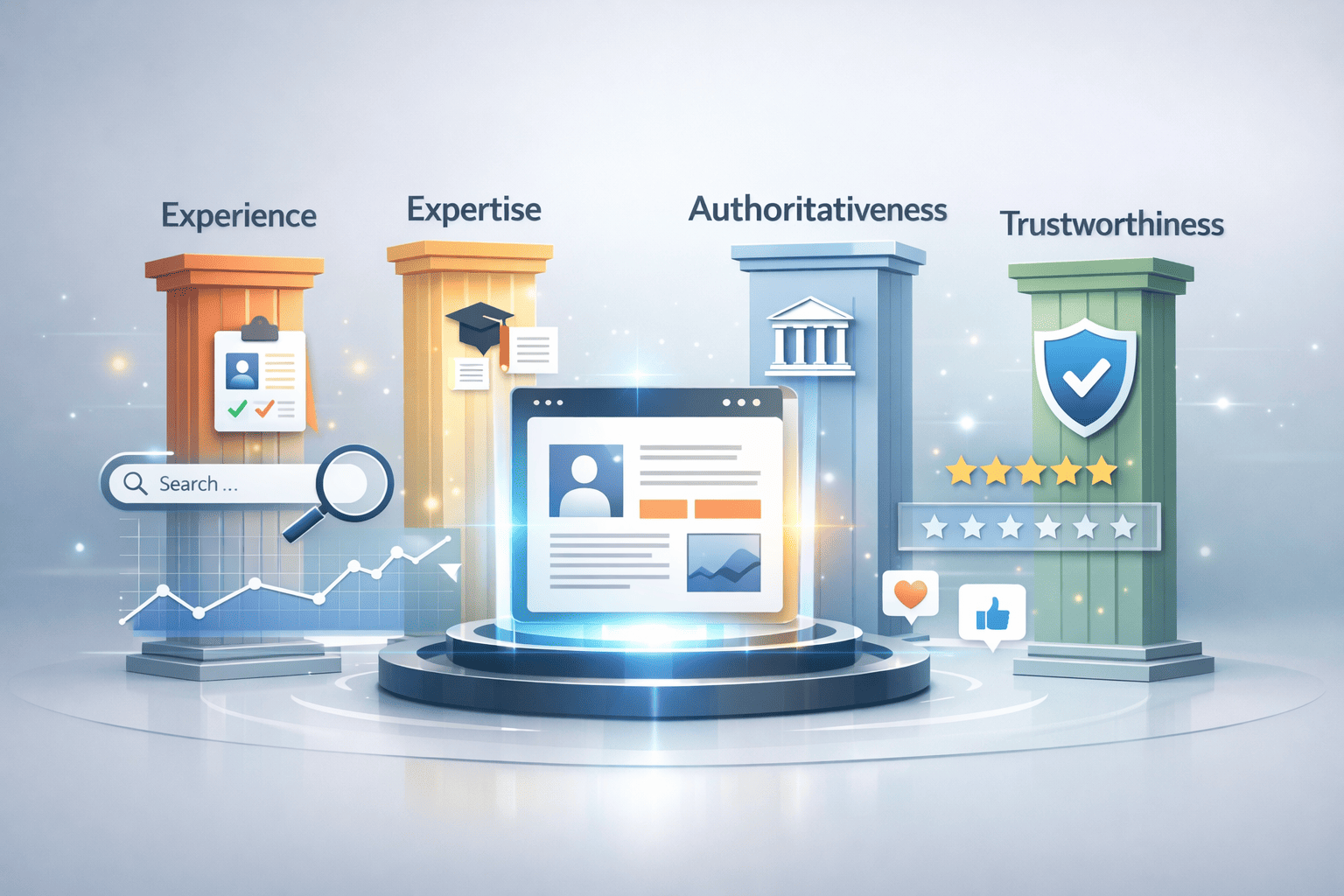
E-E-A-T stands for Experience, Expertise, Authoritativeness, and Trustworthiness.
If you want to go deeper into how Google builds authority signals, you can also read this detailed guide on topical authority SEO.
Think of it like hiring a specialized surgeon. You wouldn’t want someone who just read a book about surgery (Expertise). You’d want someone who has performed the operation a thousand times (Experience), is recognized by the medical board (Authoritativeness), and has a clean record of honesty and success (Trustworthiness).
Google applies this same logic to your website. It’s not a single ranking score, you can find in a dashboard, but rather a framework that human Quality Raters use to evaluate if a page provides high-quality information. In 2026, Google’s AI (Gemini) is now sophisticated enough to read these signals across the entire web, not just on your page.
The YMYL Nexus: Where E-E-A-T is Non-Negotiable
Not all pages are treated equally by Google. “Your Money or Your Life” (YMYL) pages—those that could impact a person’s future happiness, health, financial stability, or safety—are held to the highest possible E-E-A-T standards.

- Financial Advice: Google looks for authors with certifications (CPA, CFA). If you’re giving tax advice, “Experience” isn’t enough; you need “Expertise.”
- Medical Information: In 2026, Google cross-references medical claims with high-authority databases like PubMed or Mayo Clinic.
- News & Current Events: Authoritativeness here is measured by the journalistic integrity of the source and its history of factual reporting.
Breaking Down the Four Pillars of 2026 SEO
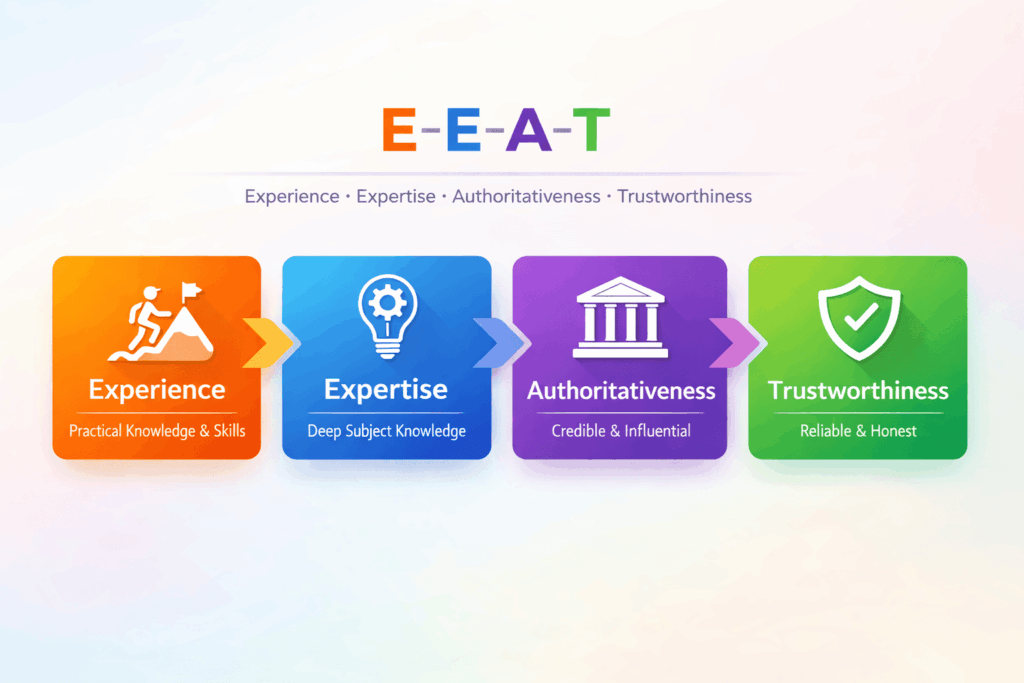
1. Experience (The “I’ve Been There” Factor)
This was the extra E added a couple of years ago, and in 2026, it is the most important differentiator from AI. Experience means you have first-hand involvement with the topic.
Example: If you’re writing a review of the latest iPhone, did you actually hold it? Did you drop it? Did you use the camera in the rain? Google looks for visual evidence, personal anecdotes, and unique insights that a generic AI summary simply can’t provide.
2. Expertise
Expertise focuses on the credentials and knowledge of the content creator. This is especially critical for “Your Money or Your Life” (YMYL) topics like health, finance, or legal advice.
Example: A blog post about heart health written by a board-certified cardiologist carries more weight than one written by a general lifestyle blogger. Google looks for signals of this expertise, such as professional titles, certifications, and a history of writing on the subject.
3. Authoritativeness
Authoritativeness is about your reputation among other experts. When other big names in your industry point to you as a source, you become an authority.
The Best Example: Imagine you run an Electric Vehicle (EV) blog.
- Low Authority: You write a great article on battery tech, but no one links to it or mentions it. You are just a lone voice.
- High Authority: You write that same article, and the next day, Tesla’s official blog, Autocar Magazine, or The New York Times links to your post as a reference.
The Nuance: It’s the difference between being a guest at a party and being the person everyone is gathered around to hear a story because they know you are the leader in that field.
4. Trustworthiness (The Most Important One)
Trust is the glue that holds everything together. If your site looks sketchy, lacks a privacy policy, or hides who is behind the content, the other three pillars don’t matter. Google wants to know: Is this site safe? Is the information accurate? Can I contact a real person if something goes wrong?
The Best Example: Compare two Health websites:
- Site A (Low Trust): No author name (just says “Admin”), no “Contact Us” page, and a generic “About Us” section. The page is cluttered with aggressive ads, and the Privacy Policy is missing.
- Site B (High Trust): The article says “Written by Dr. Sameer, MD” with a link to his verified LinkedIn profile. The footer contains a physical office address and a phone number. The site has an active SSL certificate (HTTPS) and displays real user reviews from Trustpilot.
The Logic: Google asks: “Is this site safe for a user to follow their advice?” If the answer isn’t a 100% “Yes,” you won’t rank.
Why E-E-A-T Matters More in 2026
The SEO landscape in 2026 is dominated by AI noise. Because it is now incredibly easy to generate 5,000-word articles in seconds, the internet is saturated with perfectly written but soul-less content.
Google’s response has been to double down on human signals. They want to reward content that has a pulse. E-E-A-T is their filter to sift through the billions of AI pages and find the ones that actually help people solve problems based on reality, not just probability.
If your site lacks E-E-A-T, you might see your traffic plummet during Core Updates, even if your technical SEO is perfect.
The AI Saturation Problem: Why “Human-First” is the New SEO
The internet is currently facing an Information Paradox. We have more content than ever, but less trust in it. In 2026, Google’s Generative Search Experience (SGE) can already summarize basic facts. So, why would Google rank your blog?

- The Information Gain Score: Google rewards content that provides new information that wasn’t already in its training data.
- Subjective Nuance: AI is great at facts but terrible at opinions based on scars. Sharing a mistake you made in your business (Experience) is something an LLM cannot replicate.
- The “Vibe” Check: Google’s algorithms are now sophisticated enough to detect corporate fluff. They prioritize conversational, direct, and slightly opinionated content over clinical, generic text.
How Google Evaluates E-E-A-T (Real Signals)
Google doesn’t just guess if you are an expert. They look for specific digital footprints:
- The About Us Page: Is it a generic “we love customers” page, or does it show real faces, history, and a mission?
- Author Bylines: Does every post have a real author with a linked bio?
- Third-Party Reviews: What are people saying about you on Trustpilot, BBB, or Reddit?
- Source Citations: Do you link out to high-authority studies and official documents?
- Factuality: Does your content align with the general consensus of experts? (Especially in health/finance).
The Technical Side: Communicating E-E-A-T via Schema & Metadata
You can be the smartest person in the world, but if Google’s bot can’t read your credentials, it doesn’t count. You must use Structured Data to bridge this gap:
- Author Schema: Don’t just write your name. Use Person schema to link your name to your LinkedIn profile, Wikipedia page, or other authoritative sites where you are mentioned.
- SameAs Property: This is a crucial tag in 2026. It tells Google, This person writing here is the same person who has a verified profile on Forbes or Harvard Business Review.
- Organization Schema: Clearly define your brand’s headquarters, contact points, and official social media handles.
- Citations & Sources: Use the citation property in your schema to link to the research papers or official data you used to write your article.
Step-by-Step Strategy to Improve E-E-A-T
Building E-E-A-T isn’t a weekend project; it’s a brand-building exercise. Here is how to do it effectively:
Step 1: Audit Your Authors
Stop using “Admin” or “Staff” as your author name. Create detailed author bio pages. Include their education, years of experience, and links to their social media profiles (LinkedIn is huge for this).
Step 2: Showcase “Proof of Work”
If you are reviewing a product, embed a video of you using it. If you are giving financial advice, mention your certifications. Use I and we to describe personal experiences.
Step 3: Clean Up Your Digital Reputation
Google looks beyond your website. If your brand has negative reviews everywhere, it hurts your Trustworthiness. Actively manage your presence on third-party review sites.
Step 4: Use Schema Markup
Help Google’s “spiders” understand who you are. Use Person Schema and Organization Schema to explicitly tell Google about your credentials and relationships.
The E-E-A-T Content Audit: How to Rescue Declining Rankings
If your traffic is dropping, you likely have an Authority Leak. Follow this audit framework:
| Action | What to Check | Goal |
| Pruning | Identify AI-generated posts with zero engagement. | Delete or Rewrite. |
| Author Alignment | Ensure every YMYL post is reviewed by a professional. | Add “Medically Reviewed by” or “Fact-checked by.” |
| Outbound Link Fix | Check if you are linking to low-quality or dead sites. | Link only to .gov, .edu, or industry leaders. |
| Evidence Injection | Add screenshots, original videos, or data tables. | Increase the “Experience” signal. |
On-Page SEO + E-E-A-T Optimization Tips
- Update Content Regularly: Trust decays over time. An Expert Guide from 2022 is useless in 2026.
- Transparency: Clearly label sponsored content and affiliate links.
- Contact Information: Make it easy to find your physical address, email, and phone number.
- Cite Your Sources: Use footnotes or in-text links to back up every major claim.
Common Mistakes to Avoid
- Faking Authors: Creating fake AI personas with stock photos. Google is getting very good at detecting generated faces.
- Over-Optimizing for Keywords: If your “Experience” section is just a bunch of keywords, it feels fake to the reader and Google.
- Ignoring the Niche: Trying to be an expert in everything. It’s better to be the king of Organic Gardening than a mediocre Lifestyle site.
- Neglecting Site Security: An expired SSL certificate is an instant “Trust” killer.
Real Case Studies
Case Study 1: The Health Blog Recovery
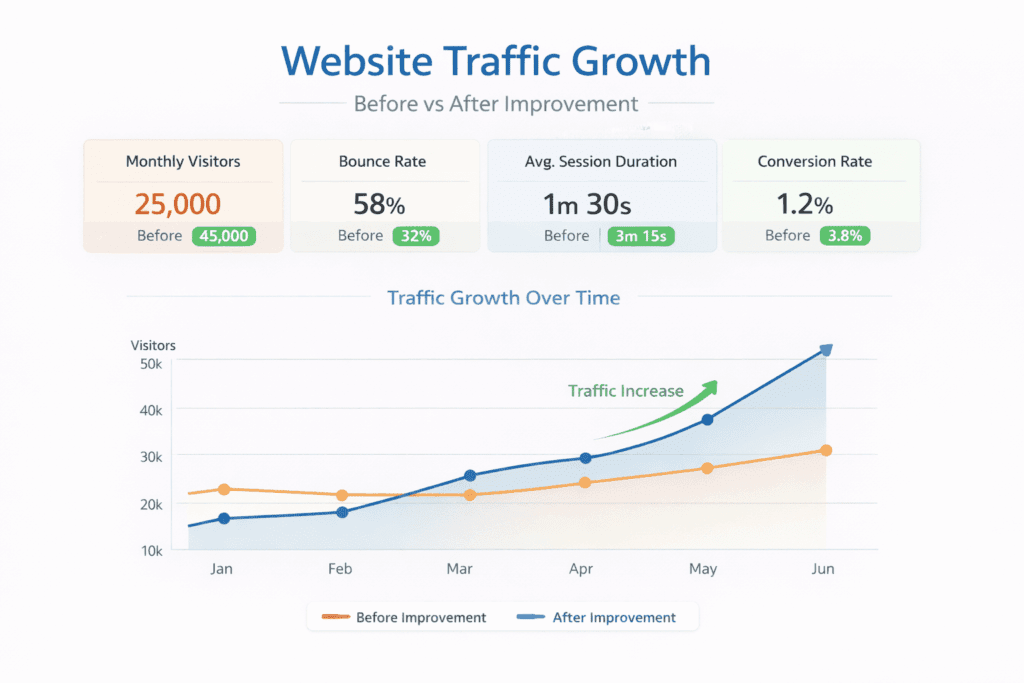
The Problem: A health blog saw a 60% drop in traffic after a 2025 Core Update. They had 1,000+ articles but all were written by anonymous freelancers.
The Fix:
- They hired a registered nurse to review every single article.
- They added a “Medical Reviewer” box to the top of each post.
- They deleted 200 “thin” articles that lacked unique value.
The Result: Within 5 months, their traffic returned to previous highs and actually surpassed them by 15% because their Trustworthiness signal was now verified.
Case Study 2: The Tech Review Site
The Problem: A new tech site couldn’t break onto page 1 despite having high-quality writing.
The Fix:
- Started including original photography instead of manufacturer stock photos.
- Added a How We Test page explaining their 10-point inspection process.
- Linked authors to their active Twitter/X accounts where they discussed tech daily.
The Result: Google recognized the Experience signal. The site began ranking for high-competition keywords like “Best Laptops for Students” within 3 months.
Tools That Help Build E-E-A-T
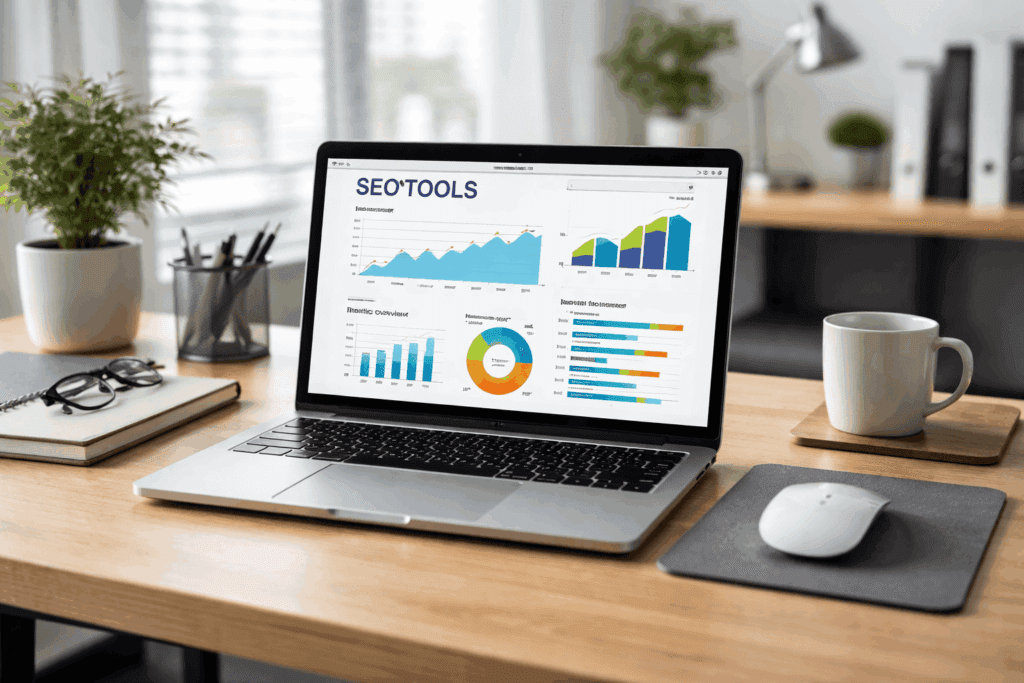
- Google Search Console: To monitor how Google sees your site.
- Schema.org: To build your technical E-E-A-T foundations.
- Muck Rack / LinkedIn: To manage and verify author reputations.
- Grammarly/Hemingway: Not for SEO, but for making your content readable and professional (Trust factor).
- Ahrefs/Semrush: To track Brand Mentions across the web.
E-E-A-T and the Rise of Social Search
In 2026, search isn’t just happening on Google. It’s happening on TikTok, Reddit, and specialized AI agents. Google is now pulling Social Proof into its ranking signals.
- Brand Mentions without Links: Even if a site doesn’t link to you, a mention of your brand name in a positive context on a forum like Reddit acts as a “Trust” signal.
- Community Sentiment: Google’s Perspectives feature prioritizes content that has active discussions and high community trust.
The Future of E-E-A-T in SEO
As we look toward 2027 and beyond, E-E-A-T will likely evolve into Personal Branding SEO. Google’s AI (Gemini) is becoming smarter at connecting the dots between what you say on your blog, what you post on LinkedIn, and what people say about you on podcasts.
The anonymous website is a dying breed. The future belongs to those who are willing to stand behind their words.
Frequently Asked Questions
- Is E-E-A-T a direct ranking factor?
Technically, no. It’s not a single score like “PageSpeed.” However, it heavily influences the signals that Google uses to rank content. Think of it as a quality framework rather than a math formula.
- Can I use AI and still have good E-E-A-T?
Yes, but you can’t only use AI. Use AI to outline or draft, but a human expert must add the “Experience” and “Expertise.” If your content looks like every other AI response, it will fail the E-E-A-T test.
- Does E-E-A-T apply to local businesses?
Absolutely. A plumber with 500 local reviews, a clear About page with photos of his truck, and a license number on the site will outrank a generic directory every time.
- How long does it take to see results from E-E-A-T improvements?
Building trust takes time. Usually, you’ll see the impact during the next major Google Core Update, which typically happens every 3–4 months.
- Do I need to be a famous person to have E-E-A-T?
No. You just need to be a verified person. Even a hobbyist can have high E-E-A-T if they show years of “Experience” in their specific niche.
0 Comments