






We’ve all been there. You spend four hours crafting the “perfect” personalized outreach email. You find the right contact, mention their recent tweet, compliment their choice of font, and hit send with high hopes.
Then? Silence. Or worse, a Link placement is $400, please response.
The dirty secret of modern SEO is that traditional outreach—the kind where you beg, barter, or bribe—is becoming less effective by the minute. Inboxes are crowded, and webmasters are cynical. If your entire link-building strategy relies on bothering people, you’re essentially running a telemarketing agency, not a digital brand.
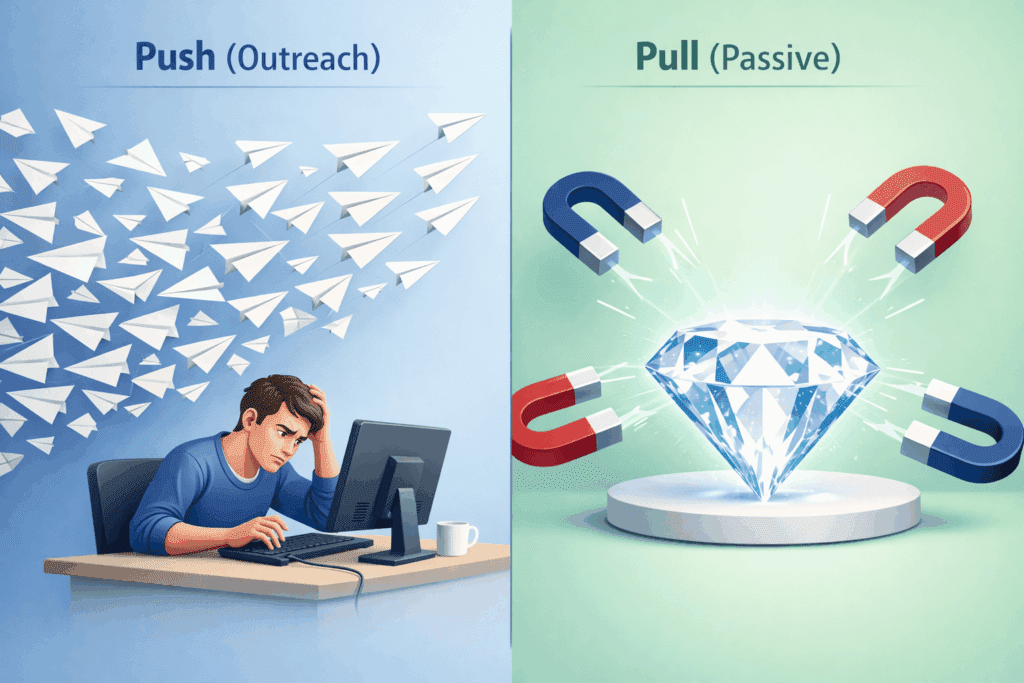
But what if links just… happened? What if you woke up, checked Search Console, and saw fresh authority links from sites you never even contacted? This isn’t a pipe dream; it’s passive link building. It’s about building assets that attract links the way a magnet attracts iron filings.
In this guide, we are going to tear down the myth that you need a massive outreach team to rank. We’re going to look at the mechanics of earning vs. building and explore 15+ strategies that put your SEO on autopilot.
If you’re targeting topics that don’t show obvious demand but still attract links, you should understand how Zero Search Volume Keywords 2026 guide works.
What Are Backlinks and Why Does Google Still Care?
Think of a backlink as a vote of confidence. When Site A links to Site B, it tells search engines, Hey, this content is worth checking out.
In the early days of the web, any link mattered. Today, Google’s algorithms are much more discerning. They don’t just look at the quantity; they look at relevance, authority, and trust. A single link from a reputable news outlet or a top-tier industry blog is worth more than 10,000 links from random forums or link farms.
The problem is that building these links manually is exhausting. That’s why the most successful SEOs have shifted toward strategies that encourage natural link acquisition.
Can You Really Build Backlinks Without Outreach? (Myth vs. Reality)
Let’s be honest: The term build is a bit of a misnomer here. You aren’t physically placing the links yourself. Instead, you are creating the conditions where other people feel compelled to link to you.
The Myth: You need to email 100 people to get 1 link.
The Reality: If you create something genuinely useful, people will link to it to make their own content better.
Passive link building is about front-loading the work. You spend more time on the asset and zero time on the ask.
15+ Proven Strategies to Build Backlinks Without Outreach
1. The Statistic Magnet Strategy
Bloggers and journalists love data. They need it to back up their claims. When a writer says, Remote work is increasing, they need a source to link to. If you are that source, you get the link.
- The Method: Find a niche topic, gather existing data or conduct an original survey, and present it in a clean, easy-to-read format.
- Step-by-Step:
- Identify a boring but essential topic in your niche.
- Collate data from 10-15 different public sources.
- Create a State of [Niche] in 2026 page.
- Use a Table of Contents so journalists can find stats quickly.
- Real Example: An SEO agency creates a page titled 50+ Voice Search Statistics for 2026. Every time a tech blogger writes about voice AI, they link to this page to cite a stat.
- When to use it: When you want high-authority news and editorial links.
2. Creating Custom Stock Graphics
People are tired of generic stock photos. If you create helpful diagrams, charts, or even high-quality photos of niche-specific items, people will use them in their own articles.
- The Method: Design helpful visuals that explain complex concepts.
- Step-by-Step:
- Look at the top 10 articles for a complex keyword.
- Identify a concept they all explain with text but no visuals.
- Create an infographic or a simple 2D diagram.
- License it under Creative Commons—requesting a link back as attribution.
- Real Example: A gardening blog creates a Soil pH Chart. Other gardening sites use the image and link back to the creator.
- When to use it: Excellent for visual niches like health, finance, or DIY.
3. The Free Tool Trap
One of the most powerful ways to get links is to solve a recurring problem for free. A tool is a linkable asset that never goes out of style.
- The Method: Build a simple calculator, generator, or checker.
- Step-by-Step:
- Find a calculation people do manually (e.g., Freelance Tax Calculator).
- Hire a developer on a freelance platform to build a simple JS tool.
- Host it on a dedicated page with an optimized URL.
- Real Example: A real estate site creates a Should I Rent or Buy? calculator. It earns thousands of links from finance blogs because it’s the easiest tool to use.
- When to use it: When you have a small budget to invest in development for long-term gains.
4. Reverse Image Search (The Attribution Method)
This is technically not outreach in the begging sense; it’s claiming what’s already yours.
- The Method: Find people using your original images without credit and ask for a link.
- Step-by-Step:
- Take your original graphics/photos.
- Run them through Google Lens or TinEye.
- Contact the site owner with a friendly note: Glad you liked the image! Would you mind adding a link to the source?
- Real Example: A travel blogger finds their photo of a hidden beach on a Top 10 Beaches list. They ask for a source link and get it 90% of the time.
- When to use it: If you already have a library of original visual content.
5. Definitive How-To Guides (The 10x Content)
If you write the absolute best resource on a topic, people will link to it because they don’t want to explain the basics themselves to their audience.
- The Method: Write a guide so comprehensive that it becomes the industry standard.
- Step-by-Step:
- Find a topic where the current top results are thin or outdated.
- Write 4,000+ words covering every possible angle.
- Use expert quotes and original examples and pro tips.
- Real Example: A coffee brand writes “The Ultimate Guide to Every Coffee Bean Variety.” Other sites link to it instead of writing their own 5,000-word glossary.
- When to use it: When you have deep expertise and time to write.
Before creating any linkable asset, make sure you understand user behavior through a solid Search Intent SEO Strategy 2026.
6. Podcast Guesting (The Reverse Approach)
Instead of pitching yourself to be on a podcast (which is outreach), create a resource that podcasters have to mention.
- The Method: Create a Show Notes worthy resource.
- Step-by-Step:
- Listen to popular podcasts in your niche.
- Notice when they say, We’ll put a link to a resource about X in the show notes.
- Make sure your resource is the best version of X.
- Real Example: A SaaS founder creates a SaaS Valuation Spreadsheet. Podcasters mention it every time they talk about selling a business.
- When to use it: To get links from high-authority podcast hosting domains.

7. The Glossary of Terms Strategy
Every industry has jargon. Beginners are constantly searching for what these terms mean.
- The Method: Build a comprehensive dictionary for your niche.
- Step-by-Step:
- List 50-100 technical terms in your industry.
- Write clear, 100-word definitions for each.
- Interlink them so Google understands the topical authority.
- Real Example: A crypto site builds a Web3 Glossary. Journalists link to specific definitions (like What is a DAO?) in their news articles to explain concepts to readers.
- When to use it: In highly technical or emerging industries.
8. HARO / Connectively (Passive Presence)
While this involves replying to queries, it’s not cold outreach. You are responding to a journalist who is actively asking for your help.
- The Method: Monitor platforms where journalists seek expert quotes.
- Step-by-Step:
- Sign up for Connectively or Featured.com.
- Set up alerts for your specific expertise.
- Provide a concise, no-fluff answer
- Real Example: A nutritionist answers a query about Best snacks for focus. They get featured (and linked) in a major health magazine.
- When to use it: To build high-tier DR (Domain Rating) links quickly.
9. Fixing The Internet’s Broken Links
This is the classic Broken Link Building but automated and focused on value.
- The Method: Find dead pages that used to have lots of links and recreate them.
- Step-by-Step:
- Use a tool like Ahrefs to find 404 pages on competitor sites that still have backlinks.
- Create a better, updated version of that dead content.
- (Optional) Let the linkers know, but often, just having the live version of a famous dead resource attracts new links naturally as people search for the old one.
- Real Example: An old Marketing Checklist from 2015 goes offline. You create the 2026 Marketing Checklist.
- When to use it: When you find zombie content in your niche.
10. Digital PR via Trendjacking
If a topic is exploding in the news, be the first one to provide a unique angle or data point on it.
- The Method: Monitor Google Trends and provide an expert take quickly.
- Step-by-Step:
- Use Google Trends to see what’s spiking.
- Quickly write a blog post with a unique perspective or expert commentary.
- Share it on social media. Journalists often search for these terms for reactions.
- Real Example: During a major Google algorithm update, an SEO tech company publishes a Live Impact Tracker. Everyone news-sharing the update links to the tracker.
- When to use it: During industry shifts or major news events.
11. Creating Templates and Checklists
People love shortcuts. If you provide a downloadable template (Google Docs, Sheets, Notion), people will link to it as a resource for their readers.
- The Method: Turn a process into a fill-in-the-blank template.
- Step-by-Step:
- Identify a task your audience struggles with (e.g., Monthly Budgeting).
- Create a Notion template or a PDF checklist.
- Make it Ungated (no email required) to maximize linkability.
- Real Example: A project management blog creates a Standard Operating Procedure (SOP) Template.
- When to use it: To get links from Resources pages.
12. Interviewing Experts (The Ego Bait)
When you interview an expert, they (and their fans) are highly likely to link to that interview from their As Seen In or Press pages.
- The Method: Host a Q&A series with mid-level industry leaders.
- Step-by-Step:
- Interview 5-10 founders or experts.
- Conduct a high-quality interview.
- Send them the link once published. They will naturally share/link to it.
- Real Example: A startup blog interviews 10 founders. 8 of those founders link to the interview from their personal websites.
- When to use it: To network and build links simultaneously.
13. The Comparison Strategy
Users often search for Product A vs. Product B. If you provide a neutral, data-heavy comparison, both the fans of those products and people looking for help will link to you.
- The Method: Create deep-dive comparison tables and analysis
- Step-by-Step:
- Choose two or three popular tools in your niche.
- Create a massive comparison table (features, price, UX).
- Update it every 6 months to stay relevant.
- Real Example: A tech site compares Slack vs. Microsoft Teams. It becomes a reference point for office managers everywhere.
- When to use it: In High-Intent niches where people are making buying decisions.
14. Leveraging Brand Mentions (The Unlinked Method)
Sometimes people talk about you but forget to link. Turning these mentions into links is the easiest win in SEO.
- The Method: Monitor the web for your brand name.
- Step-by-Step:
- Set up a Google Alert for your brand or your name.
- When a mention pops up without a link, send a quick Thanks for the mention! Would you mind making it a link so readers can find us?
- Real Example: A software company sees a blogger mention their tool in a Top 10 list. They ask for a link and get a high-quality backlink in minutes.
- When to use it: Once your brand has some existing traction.
15. The Original Research Whitepaper
This is the Statistic Magnet on steroids. It’s not just a few stats; it’s a full report.
- The Method: Conduct a deep study into a specific industry problem.
- Step-by-Step:
- Survey 500+ people or analyze 10,000+ data points.
- Write a 20-page whitepaper (PDF and Web version).
- Create a Key Findings summary for easy linking.
- Real Example: A cybersecurity firm publishes a 2026 Ransomware Trends Report. It gets linked to by every tech news site on the planet.
- When to use it: To establish yourself as a Thought Leader.

16. The Curated Resource List
Create a Best of list that is so good, the people mentioned in it want to link to it.
- The Method: Curate the best tools, books, or experts in a niche.
- Step-by-Step:
- Research the top 50 resources for a specific goal.
- Write detailed reviews for each.
- This becomes a hub that others reference when they don’t want to list resources themselves.
Advanced Strategies for Experienced Users
If you’ve mastered the basics, it’s time to look at Aggregators and Platforms.
The Niche Forum Authority
Instead of dropping links (which gets you banned), become the person who provides the “Ultimate Answer” to a recurring question on Reddit or Quora. If your answer is good enough, people will copy-paste it into their blogs and link to the source.
Programmatic SEO for Backlinks
Instead of building one page, build 1,000 pages based on data. For example, Cost of Living in [City Name] for every city in the world. Local news sites often link to these specific city pages when discussing local economics.

Real-Life Mini Case Studies
Case Study 1: The Macro Calculator
A small fitness blog built a Macro Calculator for Vegan Athletes. Within 6 months, they earned 450+ unique linking domains without sending a single email. Every “Vegan Meal Plan” article on the web needed a way for readers to calculate their macros, and they provided the best tool.
Case Study 2: The Compliance Checklist
When a new privacy law was passed, a legal-tech blog published a 10-Minute Compliance Checklist. Because they were the first to provide a “plain English” version, major news outlets linked to them as the “layman’s guide” to the law.
Common Mistakes to Avoid
- Prioritizing Quantity over Quality: One link from a site like The Verge or Forbes is worth more than 500 links from Free For All directories.
- Creating Me Too Content: If your Ultimate Guide looks exactly like the top 3 results on Google, no one has a reason to link to you instead of them.
- Ignoring UX: If your Linkable Asset is a slow, ugly, or ad-heavy page, people will be embarrassed to link to it. Professionalism breeds trust.
- Forgetting to Update: Statistics die. A 2022 Stats page in 2026 looks lazy. Keep your assets fresh to maintain your link equity.
Even the best content won’t earn links if your site has technical issues. A proper Technical SEO Audit 2026 ensures your pages are fast, crawlable, and user-friendly.

Tools to Help You Succeed
- Ahrefs / SEMrush: For finding broken links and analyzing competitor assets.
- Canva / Adobe Express: For creating those “Stock” graphics and diagrams.
- Google Trends: For identifying “Trendjacking” opportunities.
- Connectively / Featured: For responding to journalist queries.
- Exploding Topics: To find trends before they hit the mainstream.
Conclusion: Stop Asking, Start Earning
At BizSmartTools, the focus is simple – building backlinks without outreach isn’t about being lazy; it’s about being strategic. When you farm (passive), you build a system that feeds you while you sleep. Spend your time building one Statistic Magnet or one Free Tool, and you’ll find that the links you earn are more powerful and stay with you much longer.
If you’re feeling outreach fatigue, stop sending emails for a month. Instead, spend that time building one Statistic Magnet, one Free Tool, or one Definitive Guide. You’ll find that the links you earn are not only more powerful but they stay with you much longer.
The internet wants to link to great things. Your only job is to give it something worth linking to.
FAQ: Your Passive Link Building Questions Answered
1. How long does it take to see results with passive link building?
Unlike outreach, which can yield links in days, passive strategies take 3–6 months to gain momentum. Your content needs to rank for “source” keywords before journalists can find and link to it.
2. Is passive link building White Hat?
Yes. In fact, it’s exactly what Google wants. They want to see natural, earned links based on merit.
3. Do I need a high budget for this?
Not necessarily. Writing a Glossary or a How-To Guide only costs time. However, building tools or conducting original research might require a small investment in developers or survey tools.
4. Can a new website use these strategies?
Yes, but with a caveat. Since you aren’t doing outreach, you need at least some initial traffic or social media presence so people can discover your asset. Try sharing your asset in niche communities (Reddit, Discord) to get the ball rolling.
5. What is a Linkable Asset?
It’s any piece of content that provides so much value (data, utility, or clarity) that other creators want to reference it to improve their own work.
6. Will these links ever expire?
A link stays as long as the page linking to you exists. However, if your content becomes outdated, people might swap your link for a more current source. Keep your top assets updated!
7. Does every piece of content need to be a Linkable Asset?
No. You need some content for SEO, some for conversions, and some for links. A healthy blog has a mix of all three.



0 Comments