






Remember the old days of SEO? About ten or fifteen years ago, you could practically list 500 keywords on a page, hide them by making the font white, and still rank on the first page of Google.
Those days are long gone. Thank goodness.
If you want your website to rank on Google in 2026, you can’t just throw a bunch of random, low-quality articles against the wall and hope something sticks. Google has become significantly smarter. It doesn’t just look for keywords anymore.
It looks for authority. Specifically, it looks for Topical Authority.
In this guide, I am going to explain exactly what Topical Authority is, why it’s the absolute king of SEO in 2026, and, most importantly, show you exactly how to build it for your own niche website, step-by-step.
We will keep it simple, straightforward, and human-like. No crazy technical jargon, just actionable advice you can start using today. Let’s dive in.
The Death of the Keyword-Stuffed Era
What is Topical Authority in Simple Words?
Imagine you have a health question. You can ask two people:
- Your friend who reads a lot of health blogs but isn’t a doctor.
- A board-certified specialist who has spent 15 years studying and treating that specific health issue.
Who do you trust more? The specialist, right?
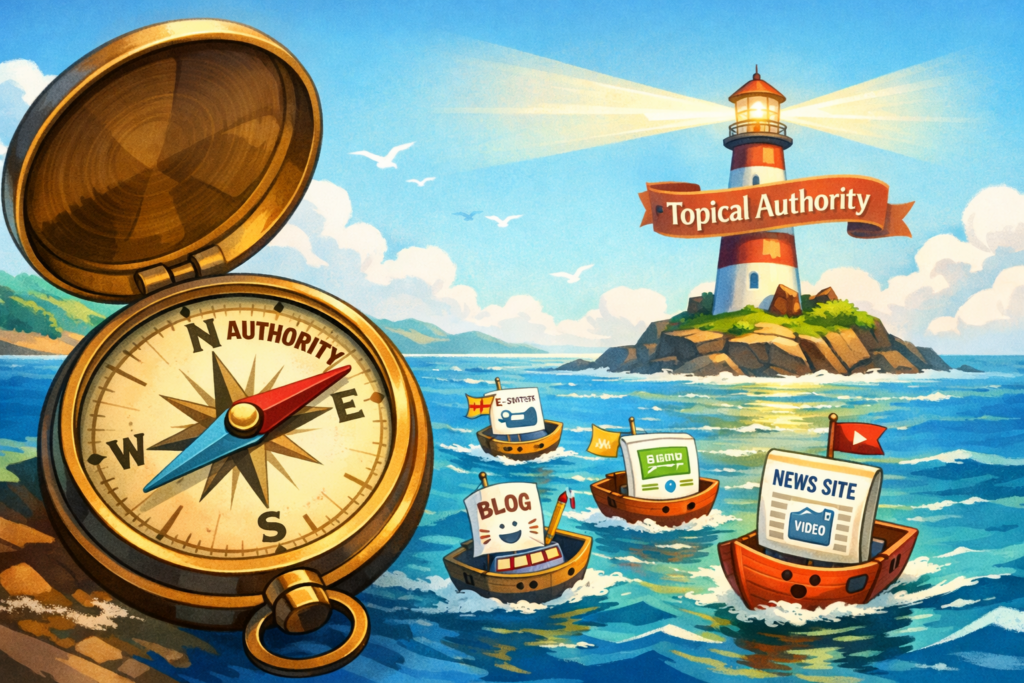
Topical Authority is the same thing, but for websites. It means Google recognizes your website as the go-to expert on a single, specific topic. You are not just writing about pets; you are the absolute authority on how to train Golden Retrievers.
You have covered every possible question, every tiny detail, and every nuance of that one subject.
Why it Matters in SEO Today
Back in the day, Google was a librarian matching keywords in your search to keywords on a page. Today, Google is a sophisticated AI that understands language, intent, and relationships.
Google’s goal is to provide the best, most reliable answer to a user’s question. They have realized that the best answers come from sources that consistently demonstrate in-depth knowledge and expertise in a specific area.
If you built a small, niche website about organic vegetable gardening in small spaces and you have 100 perfectly-interlinked, deeply-researched articles on that one topic, Google is more likely to trust you over a massive lifestyle blog that has only two articles on gardening among thousands of other topics.
Topical authority builds trust. And trust is the single most important currency in SEO today.
How it’s Different from Traditional SEO
- Traditional SEO: Focuses on optimizing individual pages for specific keywords. You write one article on “best laptops” and work really hard to make that single page rank. It’s a “page-by-page” battle.
- Topical Authority SEO: Focuses on the entire website. You write 50 articles about laptops (different brands, different use cases, comparisons, history, tech specs). The goal is for the entire collection of articles to prove to Google that your site is the laptop expert.
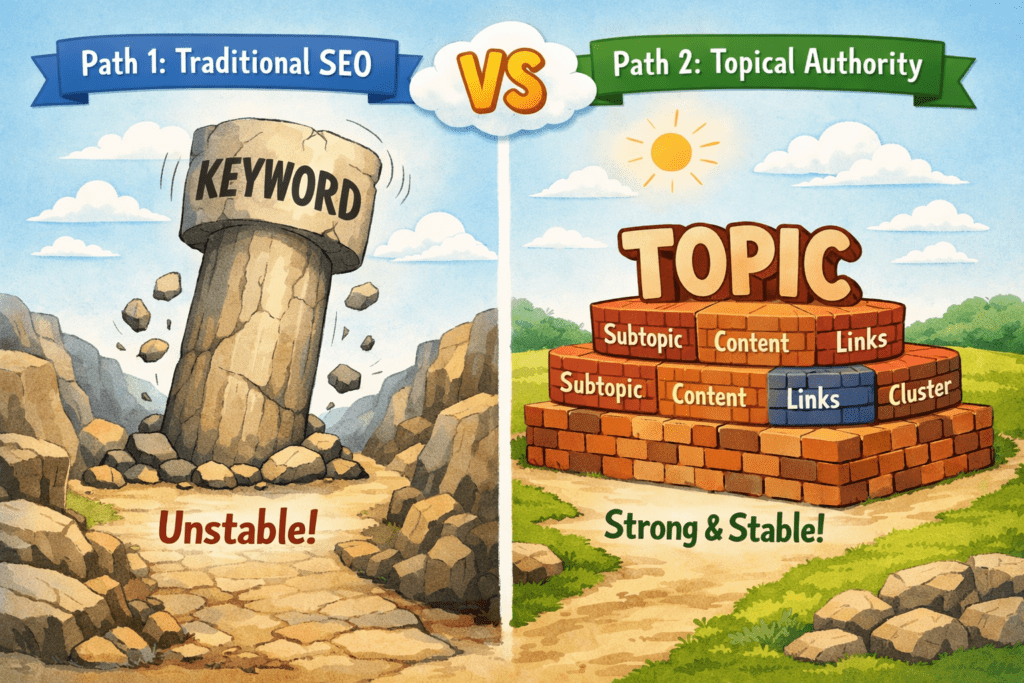
In 2026, building topical authority is the foundation. Traditional on-page SEO is just the polish on top.
What is Topical Authority?
Let’s get a little more precise.
A Simple Definition
Topical Authority SEO is a content strategy that aims to establish your website as the definitive source of information on a specific, niche topic by creating a comprehensive network of high-quality, interconnected content.
You are not trying to be everything to everyone. You are trying to be “everything” to a very specific group of people interested in a very specific topic.
How Google Understands Topics
Google uses complex algorithms and technologies like Natural Language Processing (NLP) and the Knowledge Graph. This is a fancy way of saying Google understands not just the words you use, but the meanings and relationships between them.
If you write about “barista,” Google understands that other relevant concepts are “espresso,” “latte,” “coffee beans,” “grinding,” “tamping,” “frothing milk,” and “cappuccino.”
If your website contains a massive, well-organized cluster of articles covering all these related concepts in great detail, Google’s systems connect the dots and say, Aha! This website is not just using the word ‘barista’; it truly understands the entire topic of coffee preparation.
Why Niche Websites Perform Better
This is why small, niche websites can compete with and even beat huge corporations.
If a massive media site like BuzzFeed has one article on “how to grow hydrangeas,” their site authority is high, but their topical authority on hydrangeas is low.
If you have a website called TheHydrangeaHero.com with 150 articles covering every single species of hydrangea, every potential disease, best fertilizers by soil type, pruning guides, and the history of hydrangeas, your topical authority is astronomically higher.
In 2026, Google often prioritizes that specialized, in-depth knowledge over a giant, general site. It rewards the expert.
Why Topical Authority is Important in 2026
If you want a website that consistently generates free traffic from Google for years to come, topical authority is your only path. Here’s why it’s non-negotiable in 2026.
Google Algorithm Focus: The Rise of EEAT
EEAT is not new, but it is more powerful than ever. It stands for:
- E-xpertise: How knowledgeable is the content creator?
- E-xperience: Does the creator have hands-on, real-life experience?
- A-uthoritativeness: Is the website itself a trusted source in this field?
- T-rustworthiness: Is the content honest, accurate, and safe?
Building topical authority directly satisfies the Expertise and Authoritativeness pillars. When you publish 100 deep articles on a specific topic, you are shouting to Google, We are experts! Our site is an authority!
Trust and Expertise
In a world filled with generic content (and increasingly, AI-generated fluff), users are desperate for voices they can trust.
A website with topical authority is not just trying to get a click. It’s providing a comprehensive solution. If someone finds your article on “The best camera for newborn photography” and then sees you have detailed, practical guides on lighting, safety, posing, and editing—all for newborns—their trust in you skyrockets.
Google sees this. It sees users staying on your site longer, clicking to your other articles, and coming back later. This user behavior signals that your site is a trusted resource, which is exactly what Google wants to rank.
Long-Term Traffic Benefits
Building a single, high-ranking page is a constant battle. A competitor can write a better article and take your spot.
Building topical authority is different. It’s like building a large fortress instead of a single, tall tower. You have a massive foundation of interconnected content. Even if a competitor beats you for one single keyword, your site’s overall authority remains.
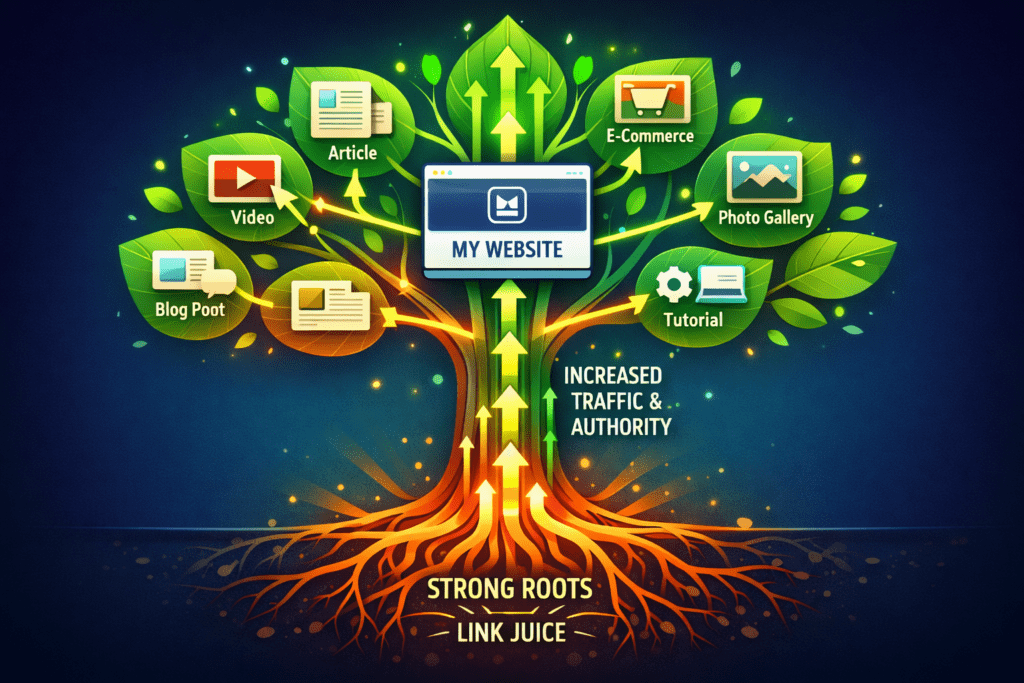
The best part? Because Google trusts your whole site on that topic, when you publish a new article, Google often indexes and ranks it much faster and higher than if your site had no authority. It creates a powerful, self-sustaining loop.
How Topical Authority Works
You don’t build authority by just writing a lot of posts. You build it by organizing them logically, creating a network of content.
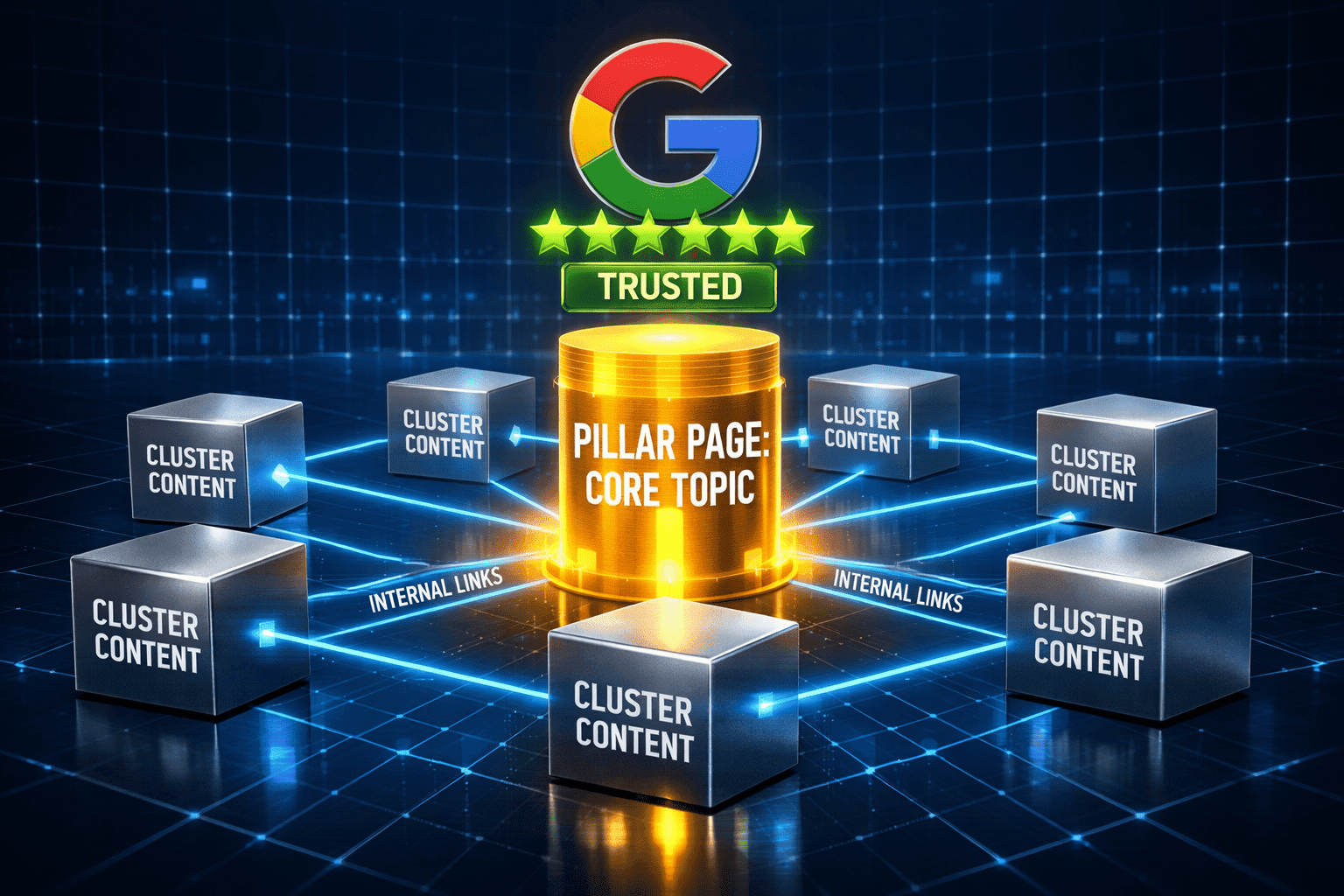
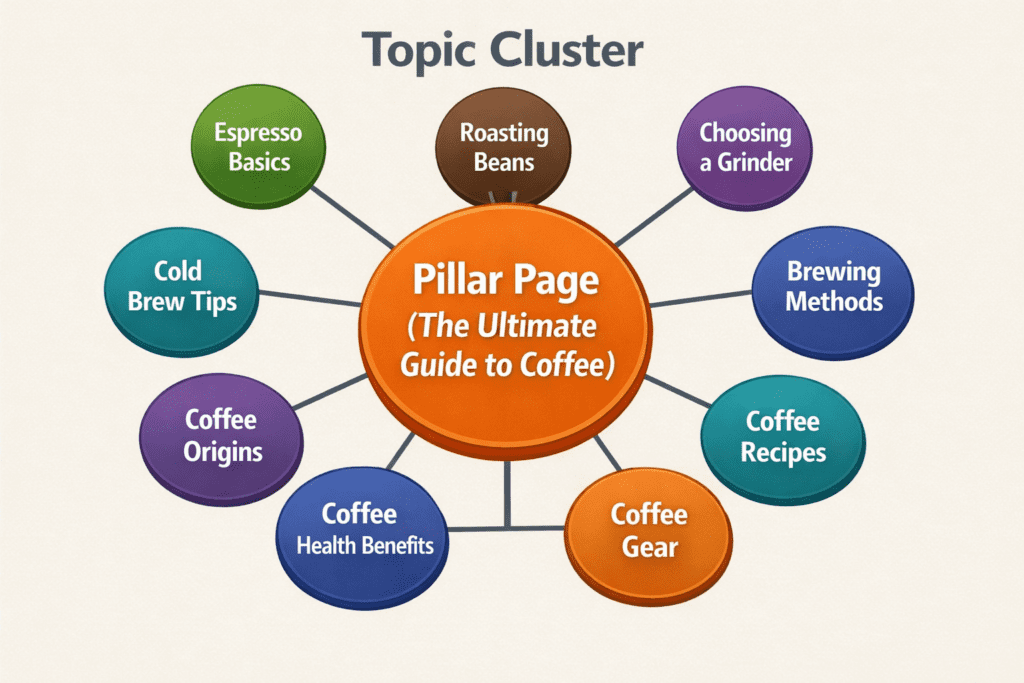
The Power of Topic Clusters
Think of a Topic Cluster like a hub-and-spoke model or a library.
- The Hub (Pillar Page): A comprehensive, broad article that covers all aspects of a major topic, but not in great detail.
- Example: “The Ultimate Guide to SEO”
- The Spokes (Cluster Content): A series of smaller, more focused articles that dive deep into specific sub-topics mentioned on the pillar page.
- Examples: “Keyword Research for Beginners,” “On-Page SEO Checklist,” “How to Build Backlinks,” “Technical SEO Basics,” “Understanding Google Search Console.”
- The Links: This is critical. The pillar page links to every cluster page, and every cluster page links back to the pillar page. This structure is a clear signal to Google: “All of these articles are part of one comprehensive topic.”
Internal Linking: The Secret Sauce
Internal links are the roadmap for both users and Google’s crawlers. When you link from a broad page to a specific page, you are telling Google, If you want to know more about this specific sub-topic, go here; we are an authority on this, too.
This helps Google understand your site’s structure, keeps users engaged (lowering your bounce rate), and distributes authority juice throughout your entire site.
Content Depth is Non-Negotiable
A topic cluster of 10 articles that are only 500 words each will not build authority. Google can tell when you’ve done proper, deep research.
To be an authority, your content must be:
- Comprehensive: Does it answer every question the user might have about that sub-topic?
- Practical: Does it give the user actionable steps, not just theory?
- Original: Does it add something new (experience, case studies, unique angle), not just rephrase the top 3 results on Google?
- Up-to-Date: In 2026, old information is useless information.
Building topical authority is about completeness, not just volume.
Step-by-Step Guide to Build Topical Authority
Now, let’s roll up our sleeves. Here is the exact blueprint for building your niche website into a topical authority in 2026.
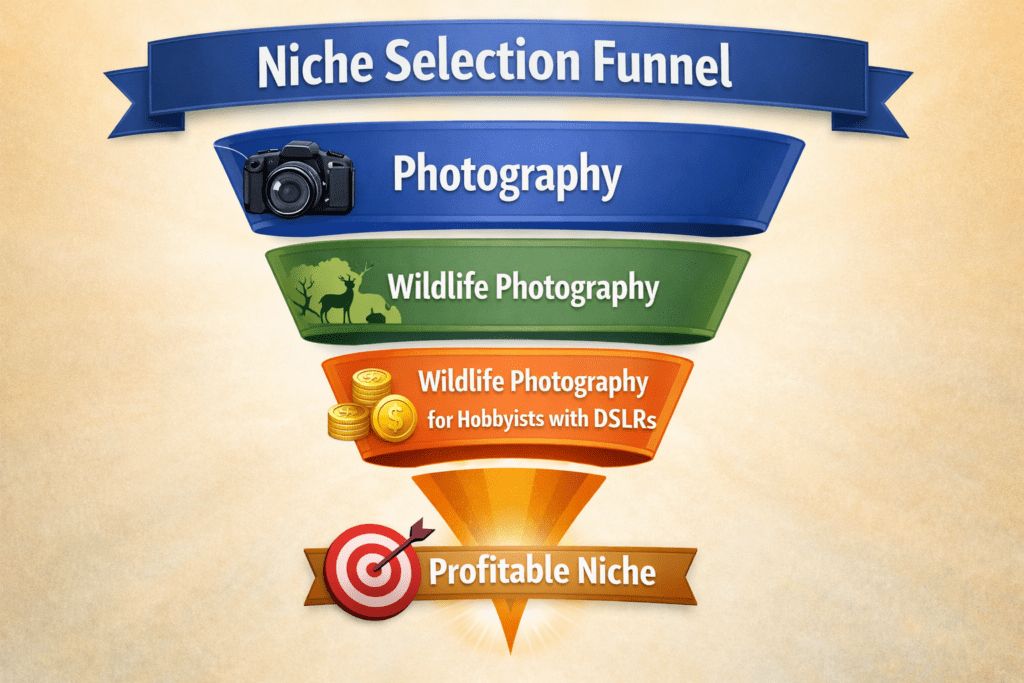
Step 1: Choose a Profitable, Specialized Niche
This is the most crucial step. If your niche is too broad, you can’t build authority. If it’s too narrow, there’s no audience.
- Don’t pick: “Fitness” (too broad)
- Do pick: “Bodyweight Training for Busy Professionals” (specialized)
- Don’t pick: “Cooking” (too broad)
- Do pick: “Gluten-Free, Dairy-Free Baking” (specialized)
Your niche must be something you can become an expert in. If you hate dogs, do not start a dog training site. You also need to make sure you can monetize it eventually (e.g., via ads, affiliate products, or your own courses).
Step 2: Create a Topical Map (Your Content Plan)
Before you write a single word, you need a map. A topical map is a complete breakdown of every sub-topic and question relevant to your niche. This will become your content calendar.
Let’s use the niche Indoor Hydroponics for Beginners as an example. Your map would have main categories like:
- Hydroponic Systems
- Plants for Hydroponics
- Nutrients and Water
- Lighting and Environment
- Common Problems & Troubleshooting
Then, under each category, you list every single article you need to write to be comprehensive. For “Hydroponic Systems,” you might list:
- What is Hydroponics? A Simple Introduction
- Deep Water Culture (DWC) vs. Kratky: Which is Best for Beginners?
- How to Build Your Own DIY DWC System (Step-by-Step)
- Understanding Ebb and Flow (Flood and Drain) Systems
- Best Pre-Made Hydroponic Kits for Beginners
- The Role of Air Pumps in Hydroponics
You do this for every category until you have a map of 50-100 logical, interconnected article ideas. This is your plan to dominate that topic.
Step 3: A Smart Keyword Research Strategy
This isn’t your traditional keyword research. You are not just looking for high-volume, low-competition keywords. You are mapping your keywords to your topical map.
Every article on your topical map needs a corresponding primary keyword:
- Use a tool like Semrush (more on this in the tools section) to find the primary keywords for your planned articles.
- But don’t ignore long-tail keywords (specific questions people ask). For the article on “Air Pumps,” your research might find questions like:
- How often to run hydroponic air pump?
- My air pump is too loud, what can I do?
- Can I use an aquarium air pump for hydroponics?
Include answers to all these related questions within your article. This shows Google you understand the full scope of the sub-topic.
Step 4: Create High-Quality, In-Depth Content
This is the hard work. You can not phone this in. For every article:
- Think Like a Pro: Research deeply. Use academic sources, government sites, primary sources (interviews), or draw heavily from your own proven experience (EEAT).
- Write for a Human: Use simple language, short sentences, and a warm, conversational tone (just like this article!). Avoid corporate speak.
- Make it Scannable: Use headings, bullet points, numbered lists, and bold text. People rarely read word-for-word.
- Add Original Visuals: Don’t just use boring stock photos. Create simple diagrams in Canva, take your own photos, or create original infographics that explain complex ideas visually.
- Go Deep: If the top result is 1,500 words and excellent, yours should be 2,500 words, better researched, better organized, and have better visuals. Aim to make it the definitive piece on the internet for that specific keyword.
Step 5: Master Internal Linking
The goal is to connect every article in a logical web. As you write, think about what other articles on your site would be relevant to the reader right now.
- Link from your Pillar Page to all the deep-dive articles in its cluster.
- Link from your Deep-Dive Articles back to the Pillar Page using a general anchor text (e.g., For more, see our full guide on indoor hydroponics).
- Link between cluster articles. In your DIY Kratky System guide, you should link to your article on “The Best Hydroponic Nutrients” when you mention feeding the plants.
Every link is a vote of confidence and a signal to Google that your site is a complete ecosystem of information.
Step 6: Consistency and Content Publishing
Topical authority isn’t built in a weekend. It’s a long-term strategy. You need to publish consistently over a long period.
- Create a realistic publishing schedule. Can you commit to two high-quality articles a week? One a week? A new, comprehensive article every week for a year is 52 articles—a fantastic start.
- Focus on one cluster at a time. It’s often more effective to publish all 10 articles for your “Hydroponic Systems” cluster before you start the “Plants” cluster. This builds concentrated authority.
Step 7: Build Critical Trust Signals (EEAT)
You must explicitly show Google (and users) why they should trust you.
- Create a Detailed ‘About’ Page: Don’t just say you love gardening. Tell your story. Why are you passionate about it? What is your experience? How many years have you been doing it? Show photos of your own hydroponic setup.
- Add Author Bios: For every article, have a clear bio box at the beginning or end. “By John Doe, avid hydroponic gardener for 10+ years.” Link this bio back to your ‘About’ page.
- Show Your Work: Whenever you make a factual claim, cite your sources. Link to high-authority websites (.edu, .gov, major industry publications).
- Add Transparency: Link to a clear contact page and a privacy policy.

Real Case Study
Let’s look at how this works in the real world. This is a common and realistic story of how topical authority fuels growth.
Example: The Solo Baker
The Niche: Specialized “One-Bowl, Stress-Free Baking.” (For people who live alone, hate doing dishes, or are new bakers).
Step 1 & 2: Mapping. Sarah, the creator, spent two weeks building a topical map. She didn’t just have random recipes. She had categories:
- Fundamental Techniques: (e.g., “How to Properly Measure Flour without a Scale”)
- Basic One-Bowl Recipes: (e.g., “The Perfect One-Bowl Chocolate Cake”)
- Advanced One-Bowl (with few tools): (e.g., “No-Knead Focaccia Bread”)
- Troubleshooting: (e.g., “Why is My One-Bowl Cake Dry?”)
Step 3 & 4: High-Quality Content. She didn’t just copy recipes. For every single one, she:
- Spent hours testing.
- Took step-by-step photos of her own hands doing the work.
- Wrote a detailed section on why this recipe works (the science, simplified).
- Listed every single common mistake you can make.
- Added a “Can I make this dairy-free?” section with tested substitutions.
Step 5: Internal Linking. Her recipe articles were masterfully linked. “This chocolate cake uses the same one-bowl method as my fudgy brownies.”
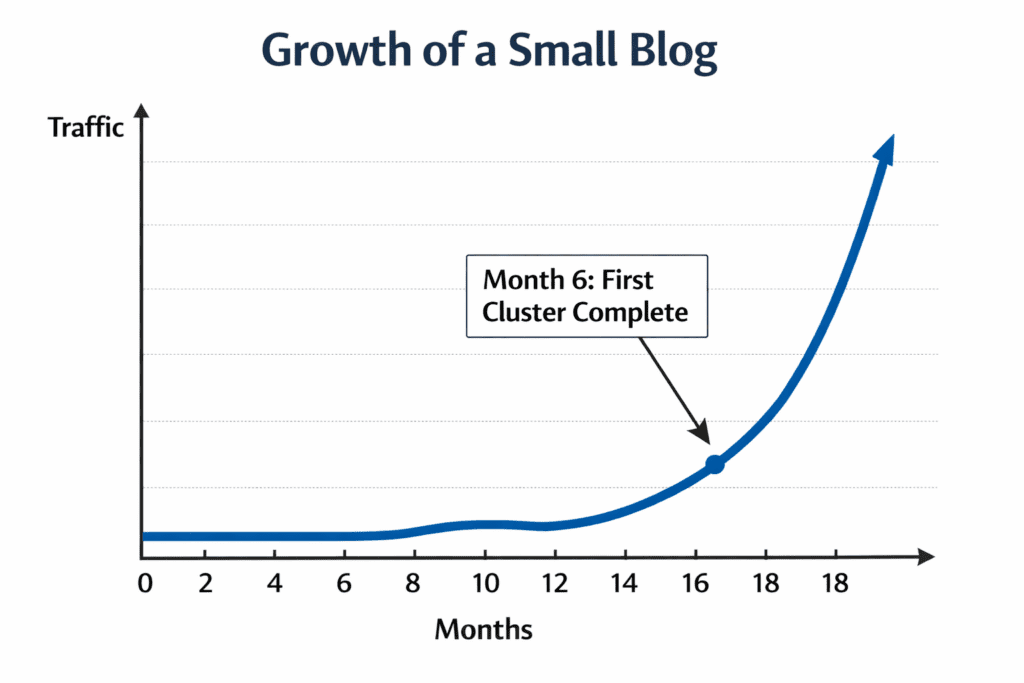
The Result (Over 18 Months):
| Timeframe | Strategy | Articles | Resulting Monthly Traffic |
| 0-3 Months | Published 2 “Fundamental Techniques” articles a week. Built a strong foundation. | 25 | < 1,000 visitors |
| 3-6 Months | Started publishing recipes from “Basic One-Bowl Recipes” cluster. Consistently linked. | 50 | 5,000 visitors |
| 6-12 Months | Completed first 3 clusters. Focused on answering common questions (troubleshooting cluster). | 100+ | 30,000 visitors |
| 12-18 Months | Traffic exploded. Google clearly saw Sarah as a one-bowl baking authority. | 150+ | 150,000+ visitors |
Notice something? The growth was exponential. The first few months were a grind with almost no reward. But because Sarah stayed focused, built comprehensive clusters, and wrote from a place of experience (EEAT), Google eventually “flipped a switch” and recognized her as an authority. She started ranking not just for long-tail keywords, but for larger, more competitive terms like “one bowl chocolate cake.”
Common Mistakes to Avoid
The path to topical authority is simple, but it is not easy. Watch out for these traps.
- Mistake #1: Writing Random Content. Don’t publish an article on “The best pet-friendly plants” if your site is about “Gourmet Pizza at Home.” It confuses Google and dilutes your authority. Every piece must fit your topical map.
- Mistake #2: Not Interlinking Your Articles. This is the biggest crime. A great article sitting in a corner with zero links to it is a dead end for users and Google. The links are the structure of your authority.
- Mistake #3: Ignoring Search Intent. Google doesn’t care that you want to write a poem about pizza. It cares about what a user searching for “pizza dough recipe” wants. Give the user exactly what they are looking for (a recipe, a step-by-step, a checklist).
- Mistake #4: Publishing Low-Quality or AI-Fluff. If you are just hitting “generate” and publishing 2,000 words of generic nonsense, you will fail. Google can tell. Your content must contain real insights, original thought, and unique value. It needs to be written by a human (or a human extremely hands-on with AI) with real passion and knowledge.
Tools to Help You Build Topical Authority
You don’t need to do this all in your head.
Semrush
This is my go-to do-it-all SEO suite. For topical authority, it’s invaluable.
- Keyword Magic Tool: Find the primary and long-tail keywords for your topical map.
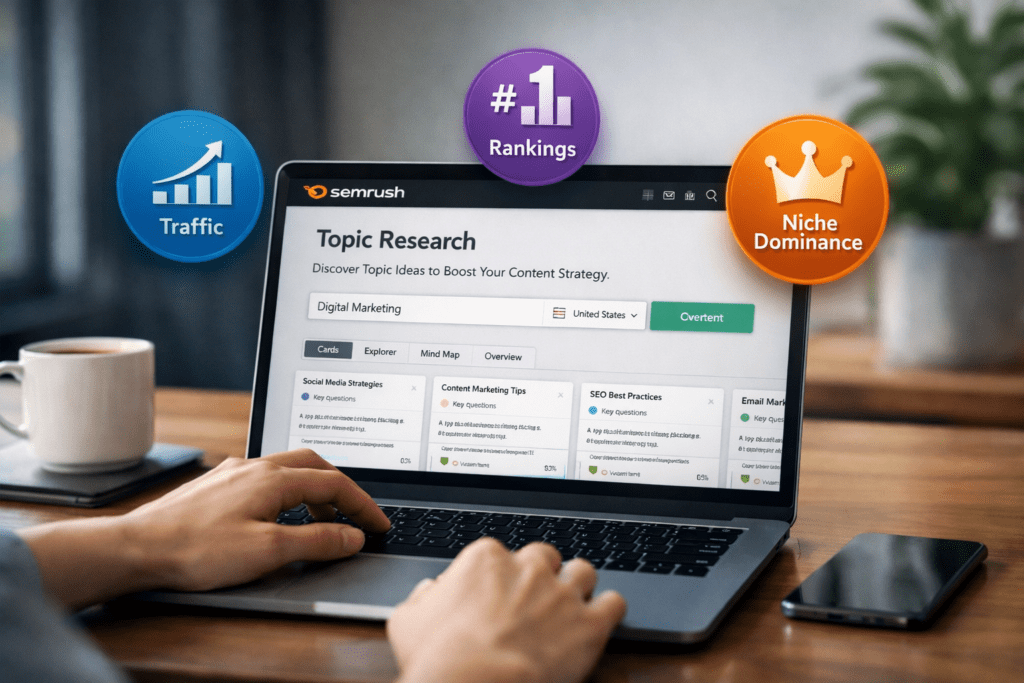
- Topic Research Tool: Enter your niche and it will automatically generate dozens of popular sub-topics and common questions, helping you build your map in minutes.
- Keyword Gap Analysis: See what topics your competitors are ranking for that you’ve missed.
If you want to automate your keyword research and build a topical map faster, you can visit the Semrush Official Website to get started with their Topic Research tool.
Google Search Console
This is the only 100% accurate tool, and it’s free. It shows you exactly which keywords people are using to find your site.
- This is gold for finding content gap ideas. If you have an article on Hydroponic Nutrients, you might see in Search Console that people are also finding you for “Hydroponic Nutrients for Tomatoes.” This is a clear sign to write a dedicated article for that specific keyword.
Canva
This is a free, incredibly easy-to-use design tool.
- A website with topical authority must have better visuals than its competitors. Use Canva to create original infographics, helpful diagrams, and beautiful featured images. This boosts your authority and encourages sharing.
How Long Does It Take to See Results?
This is the question everyone asks. Here is the honest truth.
- Honest Timeline: For a brand-new website with no prior history, expect it to take 3 to 6 months of consistent effort before you see significant, consistent traffic. The first 3 months are often called the “Google Sandbox” period. Google is just getting to know you.
- Factors Affecting Growth:
- The Niche: A super-competitive niche will take much longer than a very quiet one.
- Consistency: A post every week for a year is better than 50 posts in January and nothing for the next 11 months.
- Content Quality: Better content will be rewarded faster.
- Building EEAT: If you can quickly prove you are a legitimate expert (with, say, a huge social media following or a pre-existing professional reputation), growth will be faster.
Be patient. Trust the process. This is a marathon, not a sprint.
Pro Tips (Beginner-Friendly & Actionable)
Here are the practical tips that will give you an immediate advantage.
- Read and Analyze your Top 3 Competitors: For any given keyword on your map, google it. Spend 30 minutes reading the top 3 results. What do they do well? Where do they fall short? What questions do they not answer? This is your job: to fill those gaps.
- Add a Key Takeaways or Too Long, Didn’t Read Section: At the very beginning of your long-form content, summarize the most important points. This is a huge win for user experience and shows respect for your readers’ time.
- Use an Authoritative Voices Section: When writing about a complicated or controversial sub-topic, don’t just state your opinion. Say, “According to experts like [Name of Authority] at [Respected Institution], this is true because…” This boosts your EEAT immediately.
- Create Custom Images: Don’t be lazy. Use your phone. Take a photo of your own hands working on your niche. In our hydroponics example, a simple, real-world photo of your hand holding a ph-up bottle will win over a generic stock photo every time.
- Always Answer the Main Question in your Intro: Don’t build suspense. If the article is How to prune a rose bush, your first two paragraphs should summarize the core advice and state that the rest of the guide provides all the necessary details. Don’t hide the answer until section 5.
FAQs
What is topical authority in SEO?
Topical authority SEO is a content strategy where you establish your website as the definitive source of information on a single, specific niche topic. You do this by creating a comprehensive, deeply-researched, and interconnected network of content. It tells Google that your site is not just a collection of random pages, but a complete expert on that subject.
How many articles are needed for topical authority?
There is no magic number. It depends entirely on the breadth of your niche. A broad niche might require 200+ articles to be complete, while a very small, specialized micro-niche might only need 50. A good, realistic goal to start seeing authority signals is around 50-70 high-quality, well-interlinked articles covering at least 3-4 distinct clusters.
Does topical authority work for new websites?
Yes! In fact, it is often the best strategy for a new website. A brand-new site will not have high overall authority (like a Wikipedia or a New York Times). But by focusing incredibly narrowly and deeply on a small niche, you can prove you have higher topical authority in that specific area than the giants do. This allows you to compete and win against established players for specific keywords.
Are backlinks needed for topical authority?
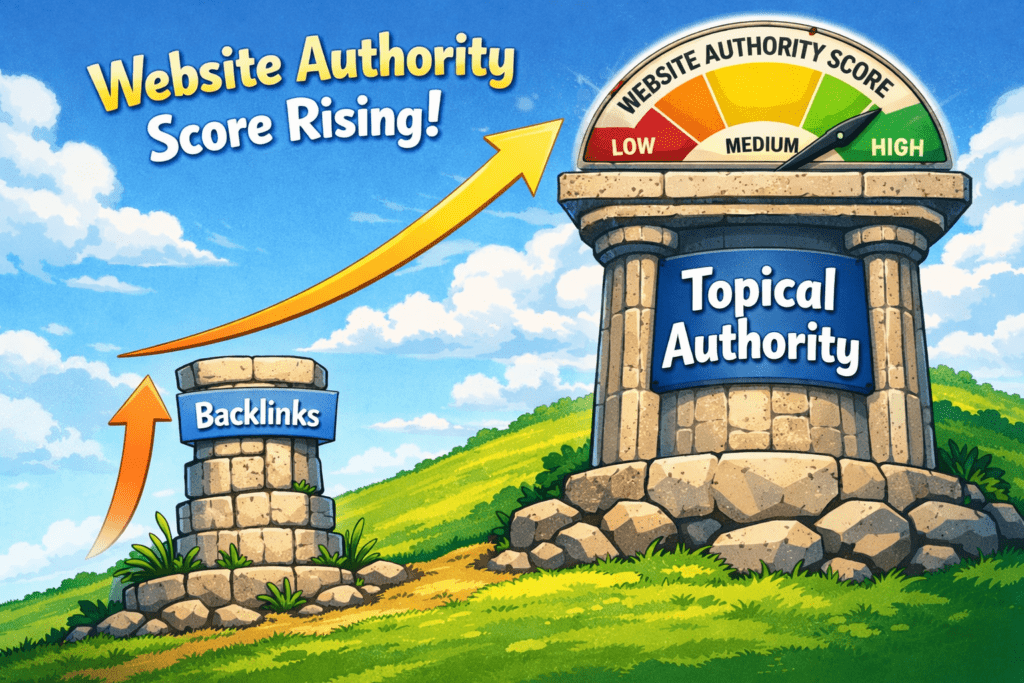
Building topical authority by yourself can do wonders and may generate excellent traffic. However, in most cases, it is not a complete solution on its own. While high-quality content and great internal links are the main factors in establishing authority, backlinks from other reputable websites in your niche are still a highly influential ranking signal for Google. Think of backlinks as another form of validation and a sign of trust that other people have for your content.
Conclusion
Building topical authority is the single most powerful SEO strategy for 2026. It’s not about shortcuts, hacks, or tricky keywords.
It’s about building a better, more helpful, more trustworthy website. It’s about being a real expert.
Yes, it takes hard work. It requires patience. But the rewards are incredible. Instead of a single page fighting for traffic, you build an entire fortress of information that Google trusts. You create a source that users genuinely appreciate and return to.
So, here’s your call to action:
- Stop thinking about keywords. Start thinking about your niche and your topical map.
- Start small. Commit to one, focused cluster of 10-15 articles.
- Write better content than anyone else. Add your own voice, your own experience, and better visuals.
- Link them together intelligently.
Take that first step today. It’s the single best investment you can make for the long-term success of your website.
Happy ranking!

0 Comments